Why does barbed wire catch flying-foxes?
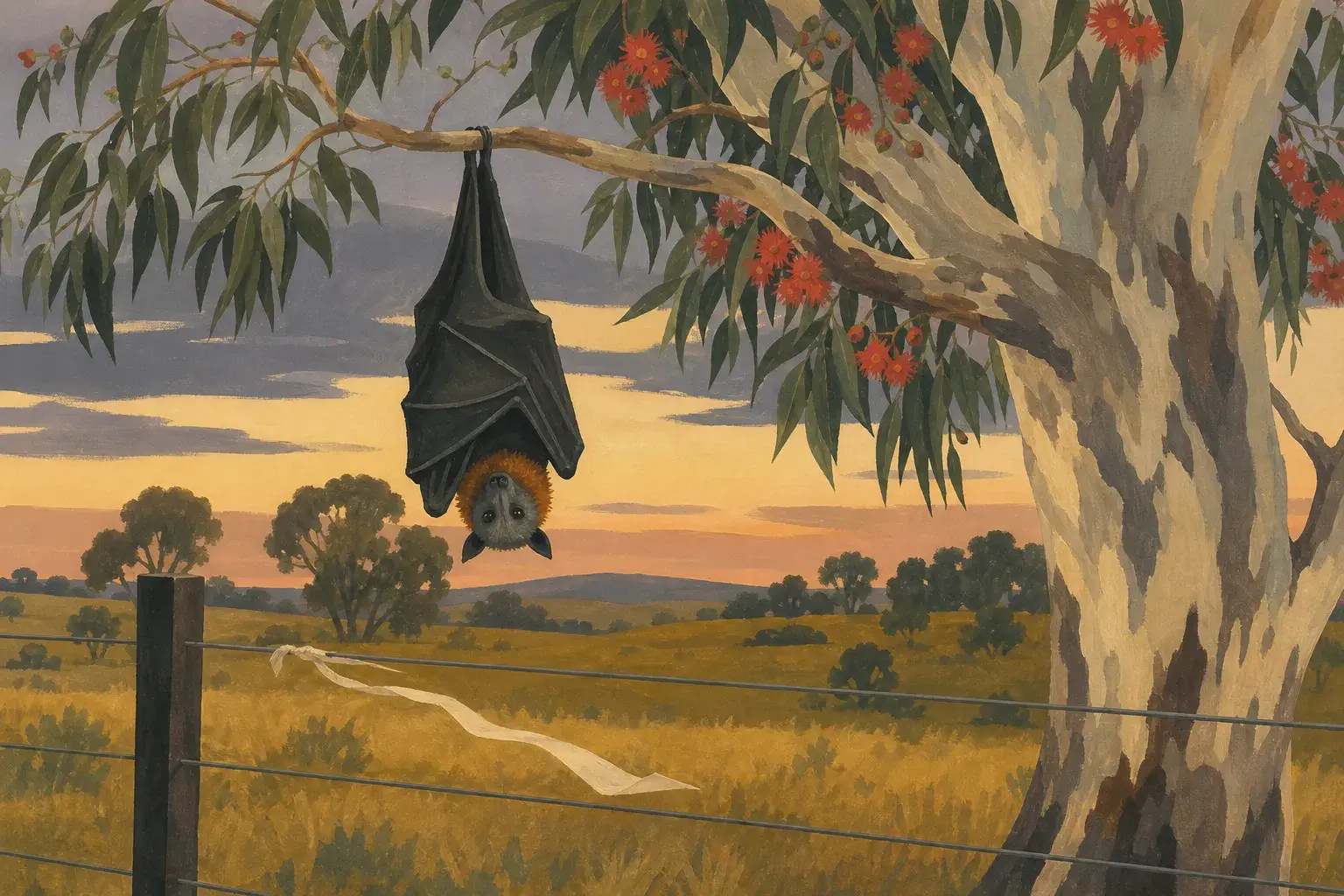
Flying-foxes work at night. They come in low to feed and drink, some never see the wire, and a gust can push them onto it.6 Once a wing membrane is hooked on a barb, struggling only tangles the animal further. Rescuers see torn membranes, broken bones and mouth injuries from chewing the wire or their own wings, and a large share of these bats have to be put down.6
The numbers are estimates rather than counts, but they are not small. Land for Wildlife Queensland puts the toll at tens to hundreds of thousands of animals a year across all wildlife.1 Barbed wire is recognised as a threat in the recovery of the grey-headed and spectacled flying-foxes, and of the yellow-bellied and mahogany gliders.1
Risk is not spread evenly along a fence. It climbs where a fence is new, runs along a ridgeline, crosses or surrounds water, sits near feed trees or stands taller than the plants around it. Wind and moonless nights make it worse again.1
What should you replace the barbed strand with?
You have four sensible options. Pick by what your stock will test.
- Plain wire. This is the default advice from the NSW Government and Land for Wildlife.31 The catch is that large stock can push through it.1
- Barbless double-strand twisted wire. Terrain NRM calls it a straight swap for barbed wire. It goes up with the same kit, and it holds cattle.2
- White coated wire. Land for Wildlife names plain wire or borderline, a strong, high-tension wire that is easy to see, and strongly recommends them for dams, flight paths and ridgelines.1
- Plain wire with an electric wire. WIRES suggests this mix for livestock.5 It needs more regular maintenance than a plain fence.1 Australian installation instructions also say barbed wire must never be electrified, so the barbs have to come off first or the hot wire has to sit on an offset.9
While you are up there, count your strands. Terrain NRM rates five-strand fences as the worst for wildlife and suggests three or four, depending on your stock.2
Where do you start if you cannot replace it all?
Start where animals are already being caught, then move to the hotspots: dams and waterways, ridgelines, and any tree overhanging the line.12 WIRES adds feed trees and wildlife corridors to that list.5
For the stretches you have to leave for now, these fixes buy time:
- Split polypipe over the barbs. It suits short sections.4 Use white pipe if you can, and cable-tie it so cattle cannot strip it off and eat it.2
- White tape or sighter wire. Tape that flickers in a breeze works better than plastic bags, which are only a short-term fix.5
- Reflective or metal tags. NSW guidance puts them along the top wire at intervals of at least 30 cm.4
- White paint. Terrain NRM suggests painting the top strands of an existing fence.2
One thing to avoid: do not plant flowering or fruiting trees beside barbed wire. You will be baiting the fence.16
What does the change cost?
We could not find a reliable national price per kilometre, so get a quote for your own run. What the sources do say is useful. Barbed and barbless twisted wire use the same installation kit and cost the same to put up, while straight plain wire needs different tools.2 NSW guidance also notes that a retrofit can end up costing more than taking the barbs off and replacing them.4
Labour is often the bigger cost, and you may not have to carry it alone. In the Young district of NSW, Landcare volunteers held a Barb Busters working bee that pulled more than 3 km of barbed wire from internal fences on one property.8 If you have internal fences you no longer need, ask your local group. Removal is the cheapest wildlife fix of all.
What do you do if you find a flying-fox on the wire?
Stay back and make the call. In NSW, contact a licensed rescue provider; the IFAW Wildlife Rescue App will find the nearest one.3 Bat Conservation & Rescue Qld takes calls on 0488 228 134.6
Do not touch the animal. NSW advice is not to handle flying-foxes unless you are vaccinated, trained and wearing protective gear.3 If you can do it without any contact, a towel thrown over the bat helps calm it while you wait.6
Time matters, because injuries get worse the longer a bat hangs there. Check hotspot fences each morning.6